Mangroves as land and ocean buffers: A comparative analysis of mangrove ecosystem services in Ghana and Tanzania
Issifu, I., M. Falayi, T. Sunderland, and U. R. Sumaila. 2026. “Mangroves as land and ocean buffers: A comparative analysis of mangrove ecosystem services in Ghana and Tanzania.” Ocean and Coastal Management 280: 108301. https://doi.org/10.1016/j.ocecoaman.2026.108301.
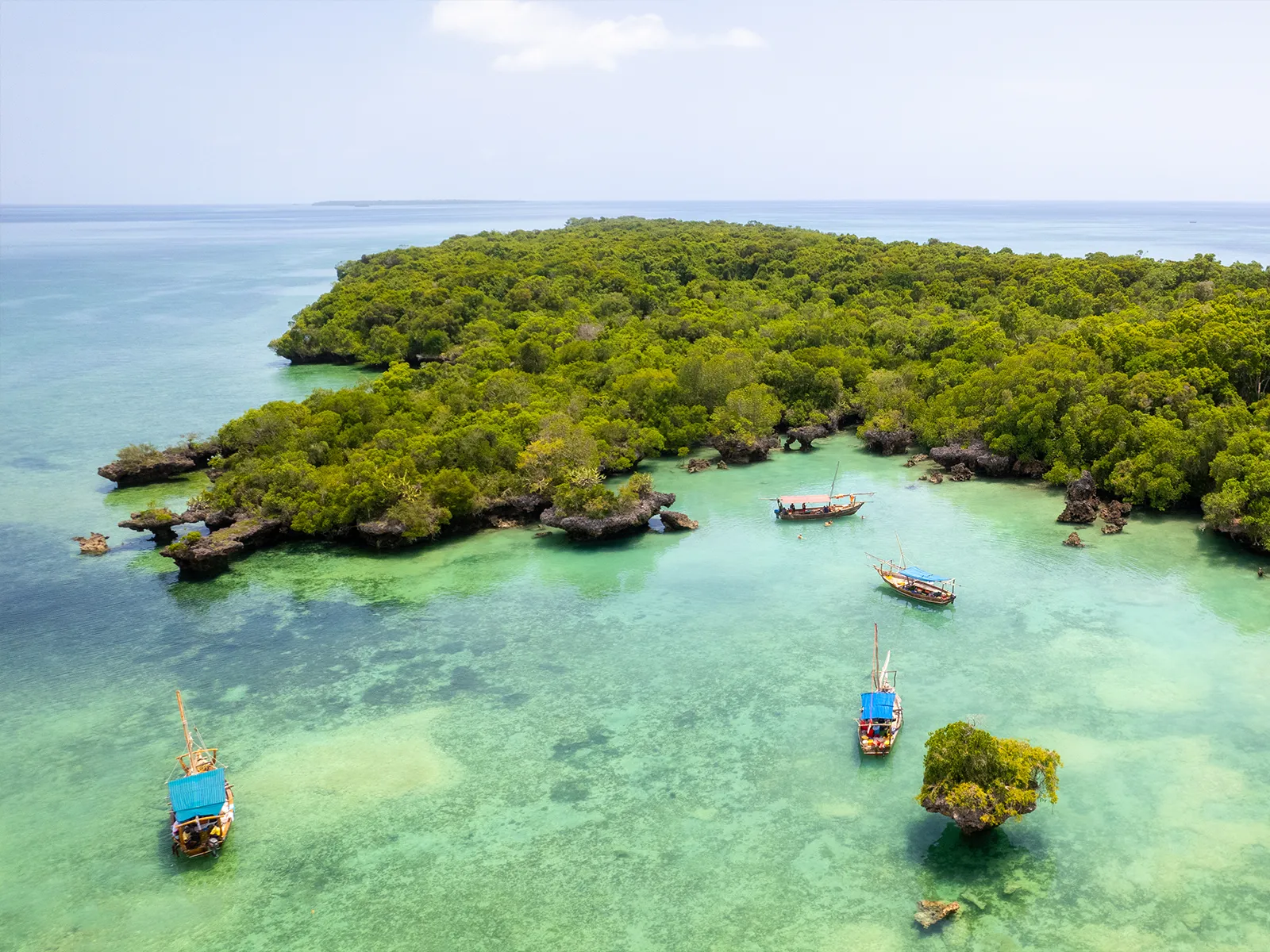
A new study published in Ocean and Coastal Management by CoastMan project members Ibrahim Issifu, Menelisi Falayi, Rashid Sumaila and CoastMan PI Terry Sunderland examines how mangrove ecosystems function as critical land-ocean buffers in West and East Africa. By evaluating mangroves in Ghana and Tanzania, the research provides a comparative analysis of blue carbon storage, coastal protection, and fisheries livelihoods, pointing to key regional trade-offs that can help guide future conservation investments.
The Valuation of Blue Carbon and Coastal Protection
Mangroves are highly efficient carbon sinks, yet global valuation models often rely on soil organic carbon benchmarks derived from Indo-Pacific forests. This study highlights how applying these global maximum coefficients can overestimate African blue carbon stocks by three to five times.
Using Africa-specific, regionally calibrated values (150–300 tonnes of carbon per hectare), the researchers calculated more realistic carbon stock baselines:
- Tanzania is endowed with approximately 110,694 hectares of mangroves (primarily in the Rufiji Delta, Tanga, Bagamoyo, and Zanzibar), storing an estimated 92–153 million tonnes of carbon dioxide equivalent of blue carbon (gross value of US$460–1530 million).
- Ghana has a smaller extent of 17,887 hectares (concentrated in estuarine systems like the Greater Amanzule Wetland and Keta Lagoon), storing 11–22 million tonnes of carbon dioxide equivalent (gross value of US$57–226 million).
Despite its smaller mangrove area, Ghana's forests provide a disproportionately higher monetary value for coastal protection. Ghana’s coastal mangroves shield high-value urban infrastructure and dense settlements, providing an estimated $121 million in annual flood protection, which rises to $469 million during a 100-year storm event. In contrast, Tanzania's larger mangrove forests are situated in more sparsely populated deltaic areas, yielding a coastal protection value of $64–179 million.
Fishing Intensity and Governance Dynamics
The study reveals a stark, 25-fold difference in median fishing intensity between the two nations:
- Ghana experiences heavy fishing pressure, with a median of 8,418 fisher-days per square kilometer per year. Approximately 40% of Ghanaian mangrove sites exceed the overexploitation threshold of 2,000 fisher-days per square kilometer per year, driven by dense coastal populations and limited alternative livelihoods.
- Tanzania maintains a much lower median intensity of 337 fisher-days per square kilometer per year, with only 10% of monitored sites exceeding the overexploitation threshold.
These differences are closely tied to national governance frameworks. Tanzania benefits from a stronger national protection regime under its Forest Act, with approximately 82% of its mangroves situated within reserves and managed via participatory Beach Management Units (BMUs) and village land tenures. Ghana, conversely, faces a fragmented regulatory structure distributed among multiple agencies, with open-access regimes and insecure traditional land tenures contributing to unregulated exploitation and urbanization-driven losses.
Pathways for Conservation and Restoration
Integrating these diverse ecosystem services into a single framework clarifies distinct national priorities:
- Tanzania as a Blue Carbon Stronghold: Because of its large, intact forests, low fishing pressure, and robust conservation framework, the primary management imperative in Tanzania is the sustained protection of existing stocks and prevention of agricultural encroachment.
- Ghana as a High-Priority Restoration Frontier: Ghana's high coastal asset exposure and high restorable area proportion (19% of its 2020 extent) mean that targeted restoration, combined with governance reforms and livelihood diversification, can maximize both climate mitigation and local adaptation co-benefits.
Ultimately, the authors suggest that successful conservation in both nations requires transitioning from short-term donor funding to durable, long-term financing mechanisms (such as blue carbon markets or voluntary carbon credits) alongside stronger legal recognition of local community-led management.
View Paper
- Mangroves as land and ocean buffers: A comparative analysis of mangrove ecosystem services in Ghana and Tanzania at Elsevier https://doi.org/10.1016/j.ocecoaman.2026.108301