July 26 is World Mangrove Day!

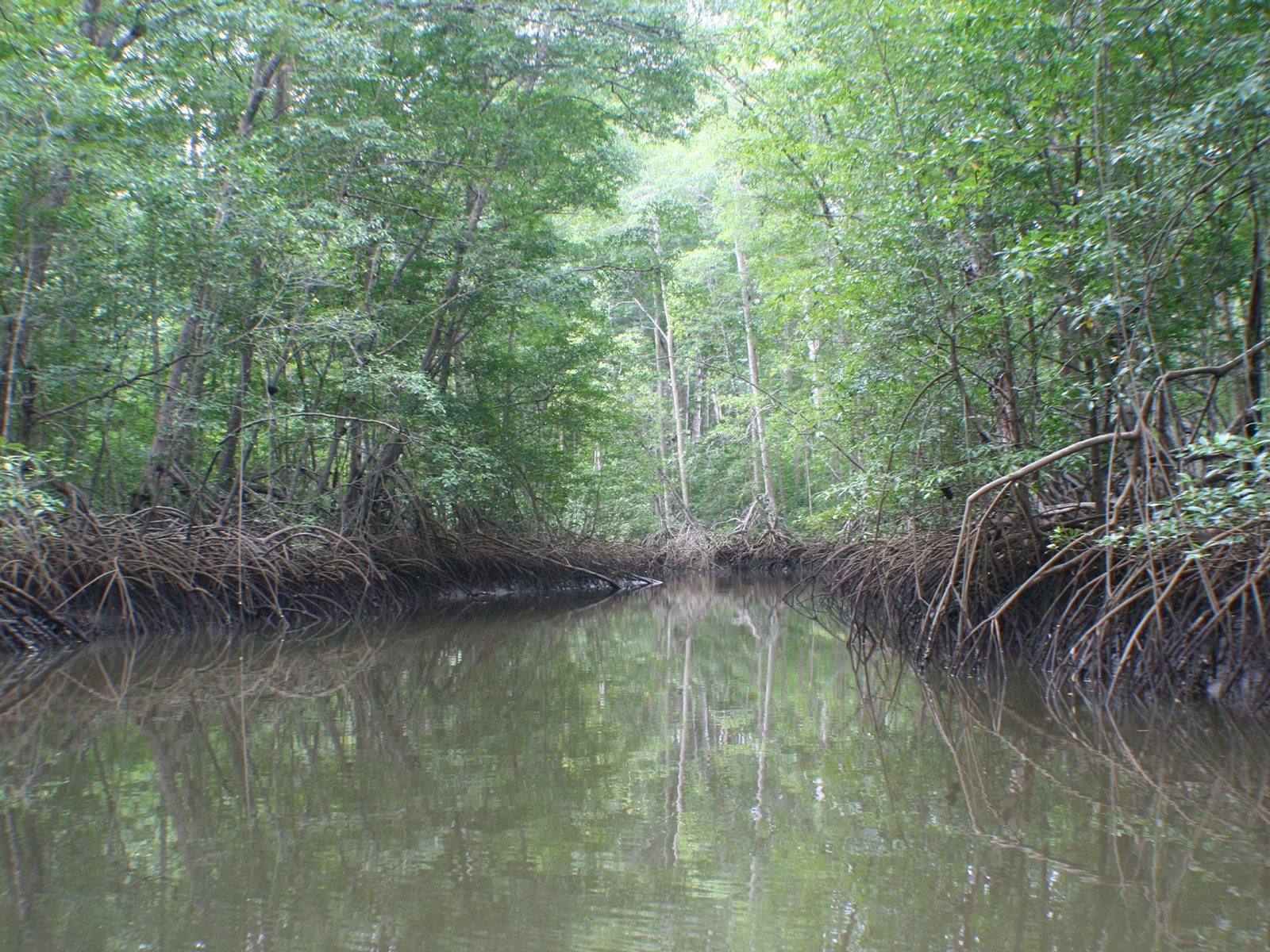
Every year on 26 July, the world marks the International Day for the Conservation of the Mangrove Ecosystem (World Mangrove Day), a global reminder of the vital role mangroves play in sustaining healthy, resilient coastal systems. Far more than trees growing along tropical shorelines, mangroves are living land–ocean buffers that protect communities from storms and coastal erosion, store significant amounts of blue carbon, support fisheries and biodiversity, and sustain the livelihoods of millions of people.
This year's observance comes at a critical time. Climate change is intensifying coastal flooding, sea-level rise, erosion, and extreme weather events, while rapid coastal development and population growth continue to increase pressure on these irreplaceable ecosystems. Conserving and restoring mangroves must therefore become a cornerstone of climate adaptation, biodiversity conservation, sustainable fisheries management, and the transition to a regenerative blue economy.
The CoastMan Project: Co-developing Innovative Decision Support Systems for Resilient Mangrove Socio-Ecological Systems
The CoastMan Project (Co-developing Decision Support Systems for Coastal Mangrove-based Socio-Ecological Systems in Eastern and Western Africa) is an international research initiative dedicated to advancing evidence-based conservation, restoration, and sustainable management of mangrove ecosystems. Running from 2024 to 2027, the project brings together researchers, policymakers, and coastal communities through a partnership led by the University of British Columbia, University of Cape Coast, Norwegian University of Life Sciences, Sokoine University of Agriculture, University of Dundee, Norwegian Institute of Bioeconomy Research (NIBIO), Mkwawa University College Of Education, and regional partners.
What is Novel about the CoastMan Project?
The CoastMan Project is pioneering an integrated approach to mangrove conservation by bringing together researchers, policymakers, technology experts, and coastal communities from Africa, Europe, and North America to co-develop innovative solutions for sustainable mangrove management.
At the heart of the project is the co-development of an innovative Multi-Criteria Decision Support System (DSS) that integrates Earth observation, field-based ecological and socio-economic assessments, and Indigenous and local knowledge to support transparent, evidence-based decision-making. By identifying restoration priorities and evaluating trade-offs among multiple ecosystem services, the DSS enables governments and coastal stakeholders to make informed decisions that balance blue carbon conservation, coastal protection, fisheries sustainability, biodiversity conservation, and community livelihoods.
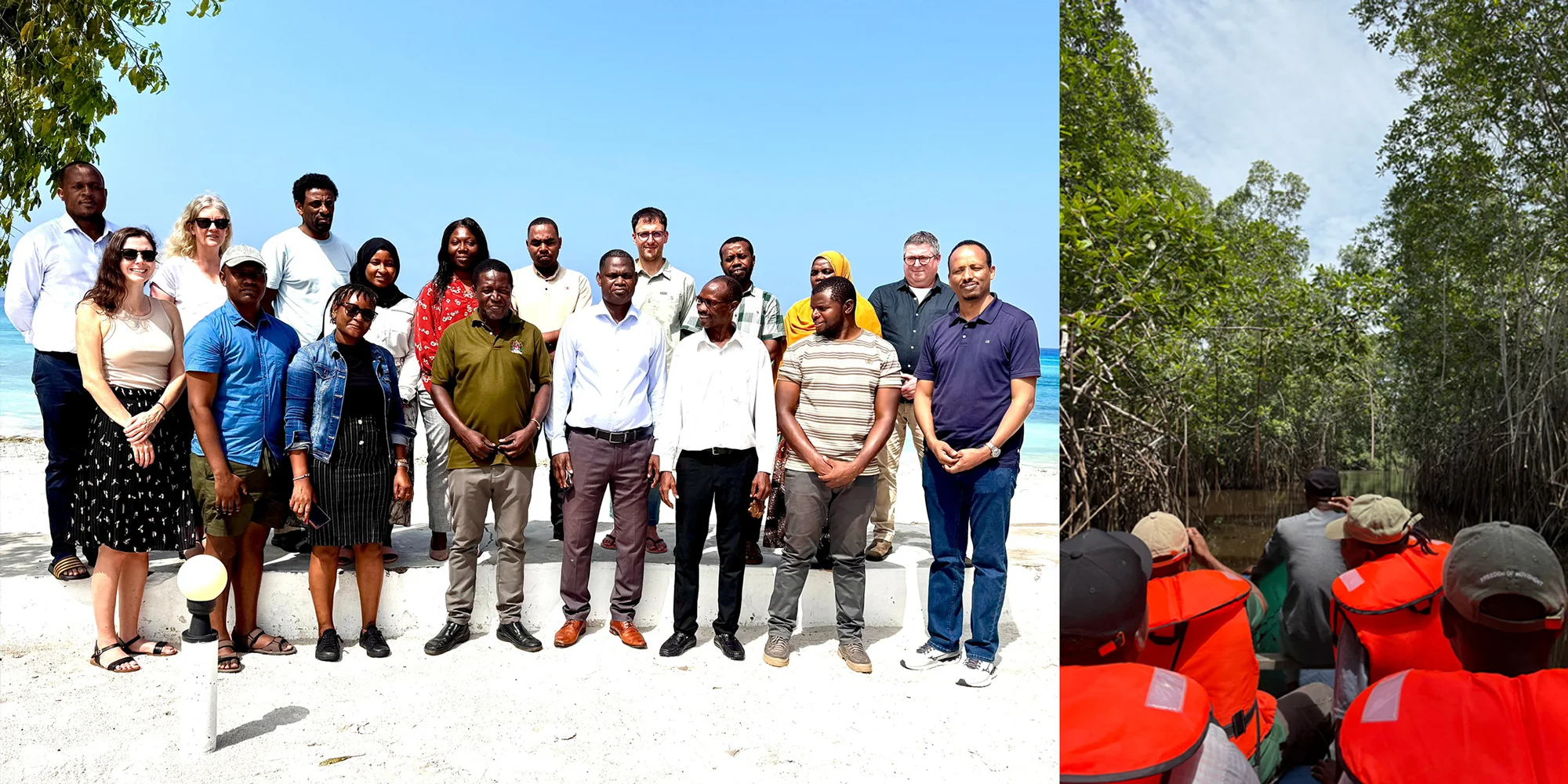
By bridging science, policy, and practice, CoastMan is developing a DSS to help governments, practitioners, and coastal communities identify restoration priorities and make evidence-based decisions that simultaneously balance:
- Blue carbon conservation and climate mitigation
- Coastal flood protection and climate resilience
- Sustainable fisheries and biodiversity conservation
- Community livelihoods and socio-economic development
By combining cutting-edge science with participatory decision-making, CoastMan moves beyond traditional mangrove restoration projects. It provides a data-driven, and stakeholder-centered framework for managing mangrove socio-ecological systems, advancing a regenerative blue economy and strengthening climate resilience across Eastern and Western Africa.
Fieldwork and Community Engagement Across CoastMan Work Packages
CoastMan's interdisciplinary work packages (WPs) are advancing collaborative research with coastal communities in Ghana and Tanzania to strengthen evidence-based mangrove conservation and management. Under WP3 (Governance and Policy), researchers from the University of British Columbia, in collaboration with the University of Cape Coast, conducted fieldwork in Ankobra (Western Region) and Anyanui (Volta Region), Ghana. Using interviews, participatory workshops, site visits, and field observations, the team examined the institutional, social, and cultural factors shaping marine and terrestrial governance, with particular emphasis on their implications for mangrove governance.
Meanwhile, WP2 is investigating the social dynamics and livelihood aspirations of youth in mangrove-dependent communities across Ghana and Tanzania. Researchers from the University of Dundee, working with colleagues from the University of Cape Coast, have employed participatory mapping and in-depth interviews to co-produce knowledge with local communities. Upon completion of the Tanzanian fieldwork, the team will develop innovative outputs, including an interactive story map, and work closely with communities to communicate findings to policymakers and stakeholders at local, national, and international levels.
Complementing these efforts, through WP1 and WP4, in March 2025 and 2026 NIBIO and NMBU conducted a fieldwork in Ghana and are developing advanced methods to improve mangrove mapping by integrating drone imagery, Copernicus Sentinel-1 and Sentinel-2 satellite data, super-resolution modelling, and GEDI biomass observations. The resulting high-resolution maps and biomass estimates provide improvements over currently available global datasets, supporting restoration planning and evidence-based decision-making.
New Research from the CoastMan Project Team
The CoastMan Project continues to generate cutting-edge research that is advancing the science and governance of mangrove conservation in Africa.
A recent study published in Ocean & Coastal Management by Ibrahim Issifu, Menelisi Falayi, Rashid Sumaila, and CoastMan Principal Investigator Terry Sunderland demonstrates how mangrove ecosystems serve as critical land–ocean buffers across West and East Africa. In a comparative study between Ghana and Tanzania, the research shows that mangroves simultaneously provide multiple ecosystem services by storing blue carbon, supporting fisheries, reducing coastal erosion and storm impacts, and sustaining local livelihoods. The study further reveals that while larger mangrove landscapes provide greater overall carbon storage, smaller mangrove forests can generate disproportionately high coastal protection benefits when located near vulnerable coastal communities.
Complementing these findings, a recent paper published in Environmental Policy and Governance examines mangrove governance in Ghana, mainland Tanzania, and Zanzibar. The study identifies fragmented governance structures, nested institutions, and overlapping mandates as key barriers to effective mangrove management, and recommends stronger policy coherence, cross-sectoral coordination, and greater community participation to improve conservation outcomes.
Conclusion: Linking Local and Global Conservation
World Mangrove Day reminds us that safeguarding mangroves is not simply about protecting forests, it is about securing the future of our coasts, our communities, and our climate. As natural land–ocean buffers, mangroves provide invaluable ecosystem services, from storing blue carbon and sustaining fisheries to reducing coastal flooding and supporting biodiversity and livelihoods. Yet these benefits will only endure if conservation efforts are guided by sound science, inclusive governance, and meaningful community participation.
The CoastMan Project demonstrates how international collaboration can bridge science, policy, and local knowledge to deliver practical solutions for resilient coastal management. Through innovative decision-support systems and evidence-based research, the project is helping governments and coastal communities make informed decisions that balance environmental sustainability with socio-economic development.
On this World Mangrove Day, let us renew our commitment to conserving, restoring, and sustainably managing mangrove ecosystems. By investing in nature-based solutions today, we can build more resilient coastlines, healthier oceans, and thriving coastal communities for generations to come. Mangroves are not just ecosystems to be protected; they are strategic natural assets that underpin a regenerative blue economy and a more sustainable future for Africa and the world.