World Mangrove Day 2026: Africa must stop treating mangroves as isolated forests, and start managing them as the bridge between land and sea

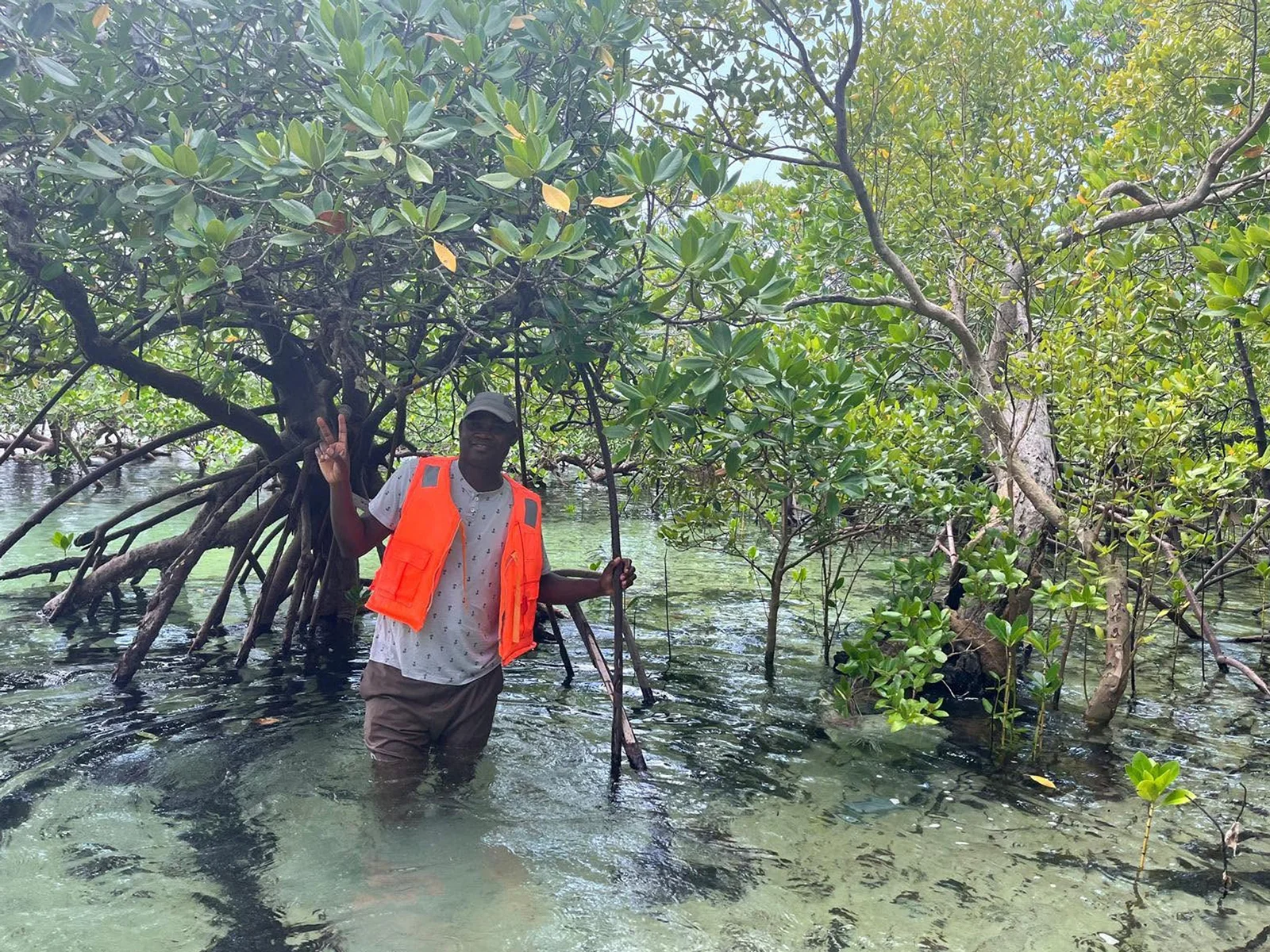
On 26 July, the world marks the International Day for the Conservation of the Mangrove Ecosystem. The celebration is often accompanied by photographs of tangled roots, restoration campaigns, and discussions about blue carbon. These are important. Yet they risk overlooking a more fundamental truth: mangroves are not simply coastal forests, they are the ecological infrastructure that connects terrestrial and marine systems.
Beyond Fragmented Policy
For too long, mangroves have been managed through fragmented policies. Climate strategies emphasize carbon. Fisheries policies focus on fish catches. Coastal planning concentrates on infrastructure. Biodiversity programmes prioritize species conservation. Each objective is important, but managing them independently ignores the multifunctional role that mangroves play.
Africa needs a different approach.
Just as recent discussions have argued that fisheries management should be linked with nutrition rather than catch volumes alone, mangrove governance should move beyond measuring hectares restored or tonnes of carbon stored. We should instead evaluate the full portfolio of benefits that mangroves generate for people, economies, and ecosystems.
Lessons from Ghana and Tanzania: Why Metrics Matter
Our recent comparative study illustrates why this shift matters.
The study found striking differences between the two countries. Tanzania possesses approximately 110,700 hectares of mangroves - more than six times Ghana's mangrove area. Under Africa-specific carbon assumptions, Tanzania stores an estimated 92–153 MtCO₂e, making it one of East Africa's most important blue carbon landscapes. Ghana stores considerably less, approximately 11-22 MtCO₂e.
If carbon storage were the only metric that mattered, the policy conclusion would appear obvious: prioritize Tanzania.
But that would be incomplete.
Our analysis also showed that Ghana's mangroves generate substantially greater coastal protection value per hectare because they occur adjacent to densely populated settlements, transport infrastructure, and economically exposed shorelines. Every hectare conserved protects considerably more people and assets than many larger mangrove systems elsewhere. In other words, a smaller mangrove forest can deliver disproportionately large societal benefits when it protects highly vulnerable coastlines.
The same principle applies to fisheries.
Mangroves serve as nurseries for fish, shrimp, and crabs that sustain millions of coastal livelihoods across Africa. Yet our research found that fishing pressure differs dramatically between countries. Median mangrove-associated fishing intensity in Ghana was approximately 8,418 fisher-days per km² per year, compared with only 337 fisher-days in Tanzania - making Ghana's fishing intensity roughly 25 times higher. This difference reflects stronger dependence on small-scale fisheries, denser coastal populations, and greater pressure on mangrove habitats.
These findings demonstrate that carbon, fisheries, and coastal protection cannot be managed separately. They are interconnected ecosystem services produced by the same ecological system.
Managing Mangroves as Land-Ocean Buffers
The lesson extends beyond Ghana and Tanzania.
Across Africa, governments are investing in blue economy strategies, climate adaptation plans, and restoration initiatives. These investments will have a far greater impact if they recognize mangroves as land-ocean buffers rather than isolated forest patches. Protecting mangroves simultaneously strengthens fisheries, reduces coastal flood risk, conserves biodiversity, stores carbon, and supports local livelihoods.
Moving Beyond Carbon Markets in Coastal Finance
This integrated perspective also has implications for financing.
Blue carbon markets have attracted considerable attention, but carbon revenues alone are unlikely to finance long-term mangrove conservation everywhere. Carbon values fluctuate, projects incur monitoring and verification costs, and many ecosystem benefits - such as avoided flood damage, fisheries productivity, and cultural values - remain outside conventional carbon markets. Conservation investments should therefore be evaluated using the combined value of multiple ecosystem services, not carbon alone.
Empowering Communities Through Inclusive Governance
Equally important is governance.
Evidence from community-led marine conservation initiatives across Africa shows that successful mangrove conservation depends on empowering local communities with clear rights, adequate resources, and meaningful participation in decision-making. Where communities benefit directly from healthier fisheries, restored mangroves, and diversified livelihoods, conservation outcomes are often stronger and more durable.
A Living Bridge Between Land and Sea
World Mangrove Day should therefore be more than a celebration of coastal forests.
It should be a reminder that Africa's climate resilience, fisheries productivity, biodiversity conservation, and coastal economies are deeply interconnected. Mangroves are where these priorities meet.
Protecting them is not simply about saving trees. It is about safeguarding food systems, reducing disaster risk, strengthening coastal livelihoods, and building a regenerative blue economy that recognizes healthy ecosystems as the foundation of sustainable development.
As governments prepare the next generation of climate and blue economy policies, one principle should guide every investment: manage mangroves not as isolated forests, but as the living bridge between land and sea.
See Ibrahim's commentary on World Mangrove Day 2026.
Dr. Ibrahim Issifu is an interdisciplinary natural resources economist at the University of British Columbia, where he advances research and innovation in sustainable fisheries, mangrove conservation, marine plastic pollution, blue carbon, and climate-resilient coastal development.
For more information, please contact: i.issifu@oceans.ubc.ca